


YOUR GUIDE TO SMARTER, HIGHER-EARNING PROPERTY MANAGEMENT
Visiting Dubai in September: Weather, Things to Do, and Travel Tips
What Dubai actually feels like in September, the tail end of the summer heat, and how to plan around it, from indoor sightseeing to a genuinely quieter, lower-tourist-volume month.

The Short Answer
September sits at the tail end of Dubai's long, hot summer. It is not the month most people picture when they think of a Dubai holiday, and the weather explains why: it is still very hot and humid, closer to August than to the mild, popular winter months that follow it. What September does offer is a genuinely quieter city, well before the October-to-April peak season brings the bigger crowds, and a trip here is entirely workable if it is planned around the heat rather than against it.
Dubai Weather in September
According to NOAA/NCEI climate normals (1991-2020), Dubai's average daytime high in September is around 38.9C (102F), with an average low near 27.7C (82F) and a mean temperature of 33.3C. Record highs in September have reached 45.1C. An independent climate data table from weather2travel.com corroborates this closely, listing a September daytime maximum of 39C and a night-time minimum of 26C, and rating September's combined heat and humidity at the top of its scale.
Humidity stays high through September, averaging around 59% for the month per NOAA data, and it can feel noticeably muggier than the drier midsummer months because the Gulf itself is at its warmest by late summer. Rainfall is effectively a non-factor: both sources point to essentially no rain in September, with an average of well under 1mm and close to zero rain days recorded historically. The UV index runs at 11, the same very-high/extreme rating held through most of the summer, so sun exposure planning matters just as much as heat planning.
Hot, But Quieter
September is not part of Dubai's main tourist season, which typically builds through October and November and runs through the cooler winter months into April. That gap in visitor volume is the honest trade-off worth weighing against the heat: fewer crowds at major attractions, shorter waits, and a noticeably calmer city compared to the winter peak, in exchange for weather that keeps most people indoors during the day.
Lower tourist volume in the shoulder season can also translate into better availability across Dubai's holiday-home and short-term rental market, since demand is naturally lower than during the winter rush. We do not publish specific September rates here, since pricing varies by building, unit, and booking window, but the general pattern, quieter month, more available inventory, holds across the Dubai short-term rental market as a whole.
Things to Do
Given the heat, September works best as an indoor-and-evening month rather than a beach-and-outdoor-activity one. Dubai has a genuinely large amount of air-conditioned, always-open sightseeing to fill a September itinerary comfortably.
- The Dubai Mall and Dubai Aquarium & Underwater Zoo: one of the world's largest malls, with a large indoor aquarium and underwater zoo built into it, an easy way to spend a full afternoon out of the heat.
- Museum of the Future: a fully indoor, air-conditioned museum in Downtown Dubai, one of the city's newer major attractions.
- Dubai Frame: an indoor, climate-controlled viewing structure in Zabeel Park with panoramic views over old and new Dubai.
- Ski Dubai: an indoor snow park at Mall of the Emirates, genuinely cold regardless of the temperature outside.
- IMG Worlds of Adventure: a large indoor theme park, another full-day option that avoids outdoor heat entirely.
Beaches and Pools
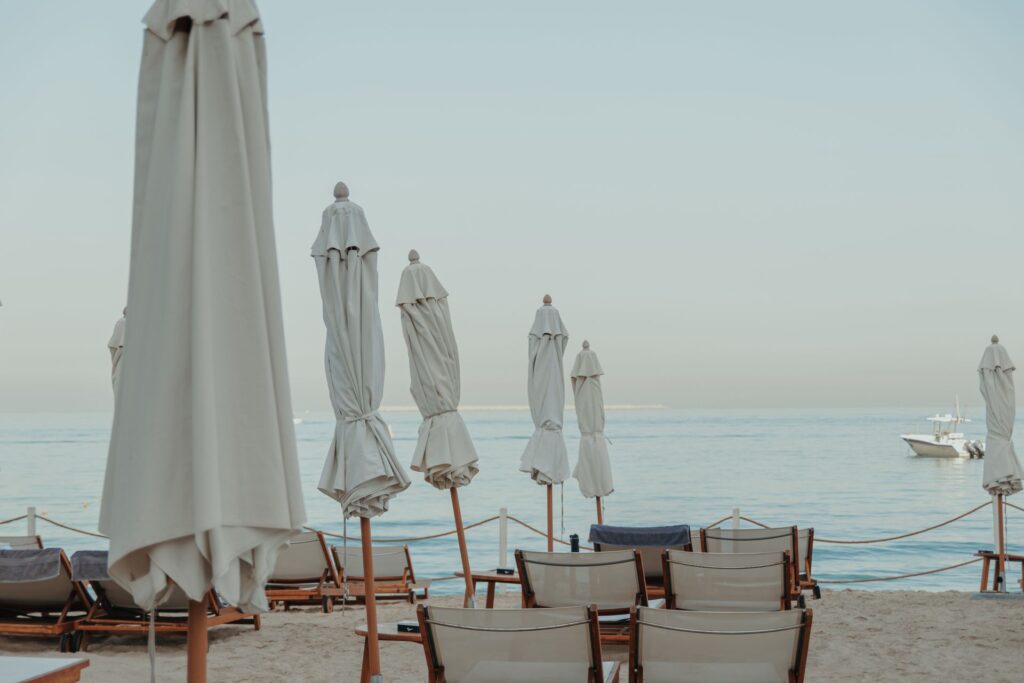
Outdoor time is still possible in September, it just needs to be timed around the worst of the heat. Early morning and evening are far more comfortable than the middle of the day, and the Gulf itself stays warm well into autumn, so beach clubs and hotel pools remain usable, just best treated as a short morning or sunset session rather than an all-day plan. Areas such as JBR and Palm Jumeirah both have beachfront access alongside plenty of air-conditioned dining and retail nearby, which makes it easy to alternate between the two rather than being stuck outdoors for hours.
Practical Travel Tips
Pack for genuine heat and humidity rather than a typical late-summer trip: lightweight, breathable clothing, sun protection, and a reason to expect to move between air-conditioned spaces often. A car or taxi between attractions is more realistic than extended walking in September, and it is worth building indoor stops into the middle of the day specifically, saving anything outdoors for early morning or after sunset.
Because September falls outside the main season, it is also worth comparing accommodation options directly rather than assuming winter-season pricing patterns apply. Anyone weighing a managed holiday-home apartment against a hotel for a Dubai stay may find our overview of Dubai's Airbnb management landscape a useful starting point, particularly for longer stays where a full apartment often makes more practical sense than a hotel room.
Questions