


Airbnb & Holiday Home Furnishing and Interior Design in Dubai
The design decisions behind how Royale Stays furnishes and styles every property, material choices, layout and property-type-specific styling built for guest photography and booking performance, not generic staging.

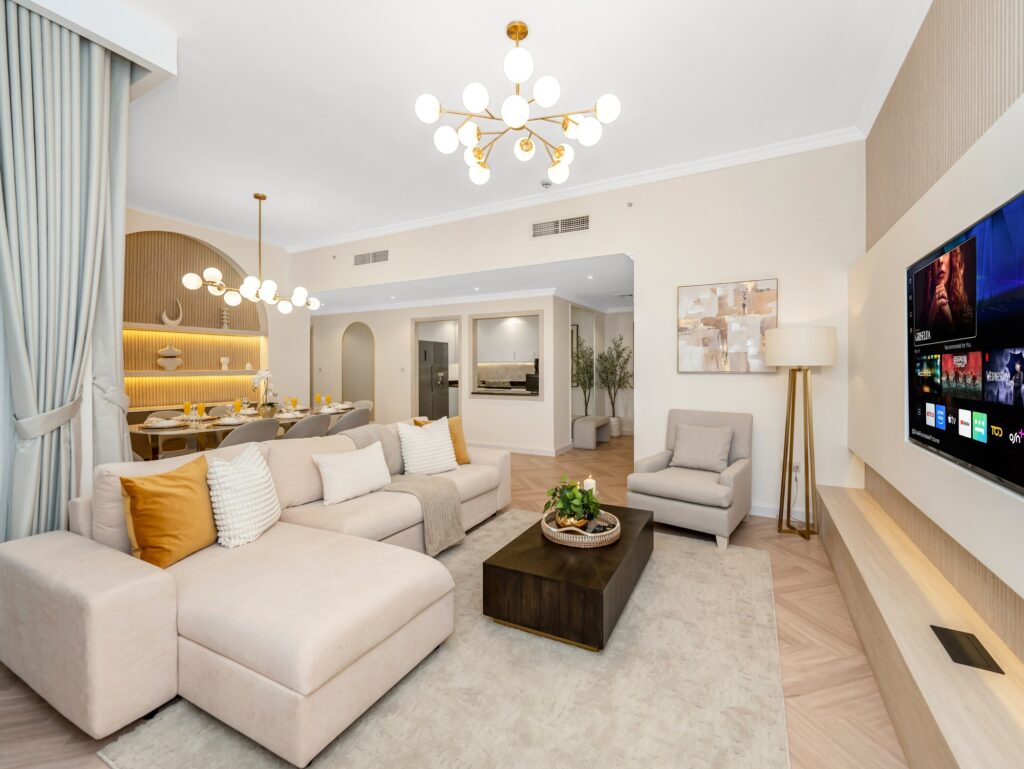
Design Philosophy
Royale Stays' Airbnb interior design work starts with how a property will be used, by short-term guests who turn over several times a month, and how it will be seen, in photographs before a guest ever books, not just how it looks on the day it is furnished. That changes almost every decision, from what a sofa is upholstered in to what colour the walls read as in a listing photo.
Furniture is chosen for how it holds up under guest turnover rather than for how it would perform in a home lived in by one household for years, which is why durable, easy-to-clean materials are the default rather than anything delicate. Colour palettes stay neutral because they photograph consistently under different lighting conditions and across different times of day, which matters more for a listing than it would for a home nobody is trying to sell in a photo. Layouts are built around how a space will actually be used and shown to guests rather than how a resident might arrange it for daily living. Dubai's climate shapes material choices directly: UV-resistant upholstery for units with strong natural light through floor-to-ceiling windows, since ordinary fabric fades and wears faster under that kind of exposure, and easy-clean surfaces built for near-constant air conditioning use rather than the more forgiving conditions of a milder climate.
Styling by Property Type
A studio or one-bedroom apartment in Dubai Marina or JBR gets a different furnishing approach to a larger multi-bedroom unit in Downtown Dubai or Business Bay. Smaller units are styled to feel open rather than cramped, using multi-purpose furniture, lighter colour palettes and sightlines that keep the space reading as bigger than its floor area in photographs. Larger apartments have more room to work with, so styling can lean into distinct living, dining and bedroom zones that photograph as separate, well-defined areas rather than one continuous room, which tends to perform better in listing photos than an open plan that reads as a single undefined space.
The villa Royale Stays manages in Mag City is styled differently again. Outdoor space, a private pool area and multiple bedrooms change what furniture and staging need to cover: outdoor furniture has to withstand direct sun for most of the year without fading or degrading, pool-adjacent seating and shade are furnished as their own zone rather than an afterthought, and indoor styling has to work across more bedrooms and living areas than an apartment does, without the spaces starting to feel repetitive across photos. In every case, the goal is the same across every property type: furniture that photographs accurately, holds up to guest turnover, and matches what the guest actually finds when they arrive.
What Guest Data Tells Us
Design decisions on newer furnishing plans are increasingly informed by what actual booking data shows guests choosing, not just by what looks good in a photograph. Layouts with a private entrance and a self-contained feel, rather than a unit that shares a corridor or lobby experience with several identical neighbours, consistently show stronger guest interest. Ground-floor or terrace-level units with private outdoor access are furnished with that access treated as a primary feature, not an afterthought, because it now measurably drives bookings rather than only adding to how a listing looks. Bedrooms are furnished and styled to support genuine blackout conditions, since guest reviews consistently flag light control as a comfort factor that generic hotel-style curtains do not solve. And for longer-stay bookings, a full kitchen and in-unit laundry are furnished to be genuinely usable day to day, not styled purely for how they photograph, since guests staying a week or more actually cook and do laundry rather than just admiring the counters.
Working with Existing Furniture
Not every property needs a full furniture replacement. During onboarding we assess what is already in the apartment against the same standard used for new furnishing: whether it will hold up to short-term guest turnover and whether it photographs well. Anything that meets both is kept; anything that does not is replaced. This keeps setup costs down for owners who already have decent furniture in place, and it is the same assessment lens used to plan pricing and listing strategy before the property goes live. For the setup timeline and what's included in the management fee, see our property setup and photography page. Owners who prefer to source and install furniture themselves can start with our DIY furnishing guide instead, which covers DTCM standards and typical costs.
Furnishing and design decisions made this way protect a property's booking rate and brand from the first listing photo onward, not just its appearance on move-in day. To have your property furnished and styled this way, Submit Property and get started today.
Questions